

Most buyers have already made up their mind about you before your sales team says a word. They’ve read your posts, checked your LinkedIn, maybe watched a video or two — and they’ve formed an opinion.
Social selling is how you show up during that research phase and make sure that opinion works in your favor!
It’s not about blasting promotional content or sliding into DMs with a pitch. Done right, social selling builds the kind of familiarity and trust that makes the eventual sales conversation feel like a formality, not a cold start. Which is why 66.9% of small businesses now say social media is critical to their overall sales.
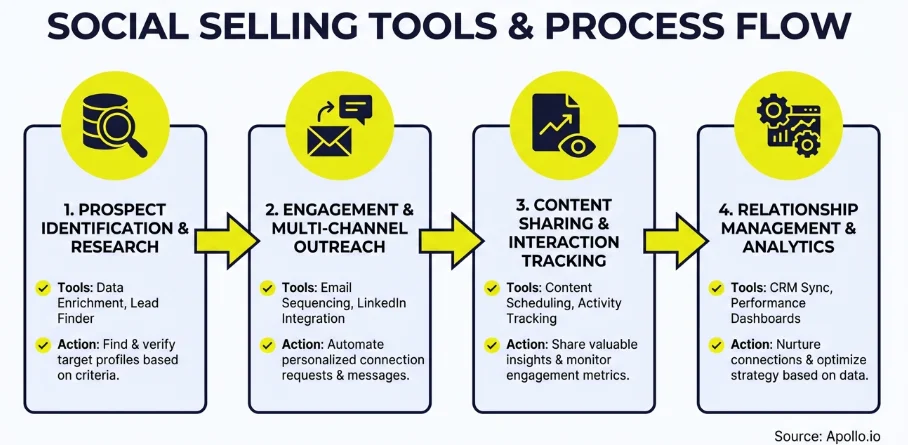
The tools that support this process range from basic scheduling apps to full-stack platforms that track engagement, surface warm leads, and tell your team exactly when to reach out.
This guide covers all of it: what social selling is, what these tools actually do, how to choose the right one, and a hands-on review of the best options available right now – with key features, honest pros and cons, pricing, and a clear verdict on who each tool fits best.
If you run a sales team, own a small business, or handle marketing for a company that wants social media to do more than generate likes, you’re in the right place.
Social selling is the art and process of using social media to find, connect with, understand, and nurture sales prospects. It’s the modern way to develop meaningful relationships with potential customers, making you the first person or brand a prospect thinks of when they’re ready to buy.
This is different from social media marketing, which is mostly broadcast – you post content to an audience and hope the right people will see it.
Social selling is one-to-one. A salesperson comments on a prospect’s posts and messages them, or slowly builds a relationship over time.
And this matters even more today because cold outreach no longer works as well. As per HubSpot’s 2025 State of Sales Report, 42% of salespeople say they get the highest response rate from prospects through social media as compared to sending an email or calling.
However, for your social media sales strategy to succeed, you should first understand how each platform performs and which one makes more sense depending on your business objectives.
For instance:
TL; DR: What is Social Selling?
Social selling is the practice of using social networks to build relationships, nurture leads, and guide prospects through the buying process. Unlike traditional, broad social media marketing, which focuses on attracting general audiences to a page, social selling centers on direct, personalized interactions to build long-term trust. However, social selling and social selling tools will only supercharge your sales game if you know how to make good use of each social media platform. Different social platforms make more sense for different objectives.
Social selling tools help you source the right prospects using filters such as job title, company size, industry, and location.
You can use them to monitor buying signals and trigger events such as funding rounds, job changes, or even a prospect engaging with a competitor’s content.
Social selling tools also:
The LinkedIn Social Selling Index, or SSI, is a free score ranging from 0 to 100 that measures how effectively you’re using LinkedIn to generate sales.
LinkedIn calculates your SSI score based on four areas:
Your SSI score matters because sales professionals with higher scores tend to hit quota more often and build stronger pipelines. A consistently high score reflects steady activity across all four areas, not just one strong week.
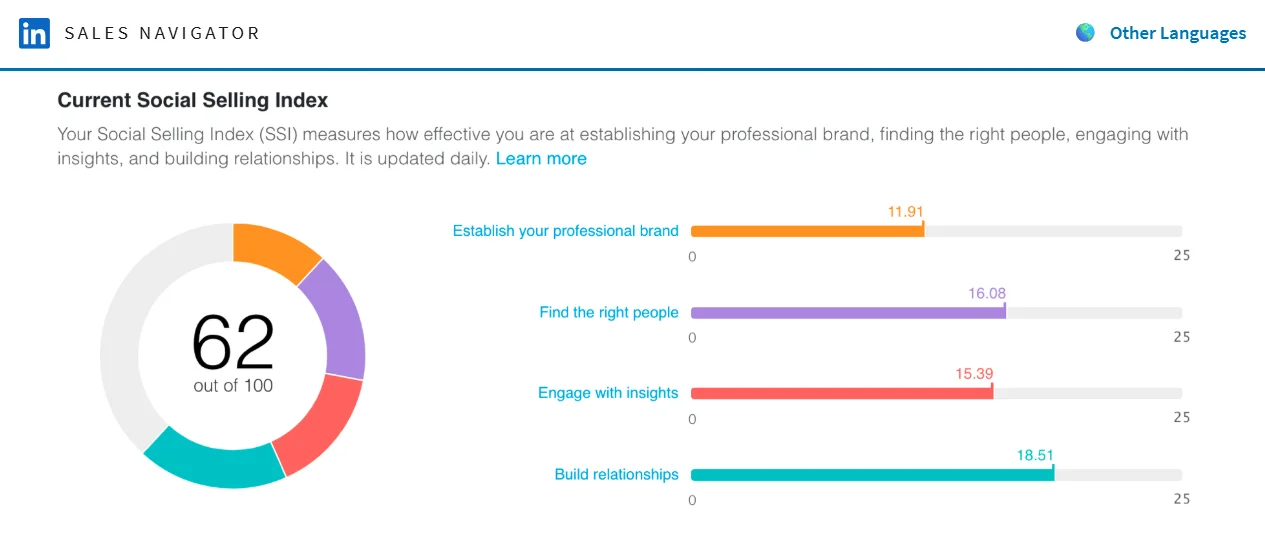
You can check your SSI score for free at linkedin.com/sales/ssi as long as you are logged into LinkedIn.
The right social selling tools help raise this score by making it easier to post consistently, find the right prospects, and stay active in conversations that matter.
Here is a closer look at the top social selling tools worth considering, with a focus on how each one specifically supports selling on social media:
LinkedIn Sales Navigator is LinkedIn’s premium sales tool, built for anyone doing B2B social selling. With advanced search filters so powerful, you can only get in front of decision makers by their job title, company size, industry, and plenty more.
You even have lead and account recommendations, real-time alerts when a prospect changes jobs or posts an update, and InMail credits to message people outside your network. LinkedIn Sales Navigator suits B2B sales teams, recruiters, and account execs who want to leverage LinkedIn marketing or depend heavily on LinkedIn as their primary prospecting channel.
Best For: B2B prospecting and relationship building on LinkedIn.

Pros:
Cons:
P2P Score: 4.9/5
Website: https://business.linkedin.com/sell/sales-navigator
Hootsuite is a social media management platform that works well for social selling across multiple networks. You can schedule posts, monitor brand and competitor mentions, and respond to messages from one inbox across LinkedIn, X, Instagram, and Facebook.
Hootsuite’s social listening features help you spot conversations where your brand or product comes up, so your team can jump in with a helpful reply.
Best For: Multi-platform social media management and monitoring for teams active on LinkedIn, X, Instagram, and Facebook.

Pros:
Cons:
P2P Score: 4.8/5
Website: https://www.hootsuite.com/
Sprout Social combines social media management with listening and reporting, which is quite useful for sales and marketing teams that want to track conversations and respond quickly.
One of the tool’s standout features is the Smart Inbox, which allows you to unify and respond to comments, direct messages, and brand mentions across all your social channels (including LinkedIn, X/Twitter, Instagram, and Facebook) in one place.
Sprout Social also offers reporting that shows which content drives engagement and helps you understand which types of posts attract the right audience.
Best For: Teams that need detailed analytics and social listening alongside social media management.

Pros:
Cons:
P2P Score: 4.7/5
Website: https://sproutsocial.com/
Cognism is a B2B sales intelligence and prospecting platform that provides sales teams with verified contact data, including phone numbers and email addresses, as well as signals indicating when a prospect is ready to be approached.
As a social selling tool, Cognism helps you identify the right people to connect with on LinkedIn and gives context about their company, role, and recent activity before you reach out.
The tool works best for outbound sales teams in Europe that combine social media with phone and email outreach and want accurate data behind every connection request.
Best For: B2B sales teams that need verified contact data and intent signals for LinkedIn outreach; strong for Europe-focused operations.

Cons:
P2P Score: 4.5/5
Website: https://www.cognism.com/
ZoomInfo is one of the best social selling tools for showing you who within a target account is active and influential, so you know whom to connect with. The platform boosts your B2B social media marketing and sales by bridging the gap between social media research and direct, actionable outreach.
Instead of guessing who to target, you use ZoomInfo to identify the precise decision-makers and buying committees, and then use its intelligence to reach out on platforms like LinkedIn. The tool also tracks events such as funding rounds, which provide natural reasons to reach out.
Best For: Larger B2B teams that need a deep contact database and buying signal alerts to guide LinkedIn outreach.

Pros
Cons:
P2P Score: 4.7/5
Website: https://www.zoominfo.com/
Expandi is an alternative to LinkedIn Sales Navigator, built for those who want to automate sending connection requests, follow-up messages, and InMails without having to do them manually every day.
The tool runs in the cloud with a dedicated IP address for each account, which keeps your LinkedIn activity looking natural and reduces the risk of restrictions.
You can build multi-step sequences that combine LinkedIn actions with email and personalize messages using details pulled from a prospect’s profile.
Best for: Agencies, founders, and sales teams who rely on LinkedIn outreach without losing the personal touch.

Pros:
Cons:
P2P Score: 4.7/5
Website: https://expandi.io/
Brandwatch is a social listening and consumer intelligence tool that helps you understand what people say about your brand, competitors, or industry on social media.
The tool excels at helping identify conversations to contribute to and build trust before any ‘selling’ takes place.
Brandwatch also highlights trends and overall sentiment to guide the content that the sales team should share.
Best For: Larger teams wanting to leverage social selling through listening.

Pros:
Cons:
P2P Score: 4.5/5
Website: https://www.brandwatch.com/
Oktopost is a B2B social media management platform focused on employee advocacy and social selling for marketing and sales teams.
You create content libraries that employees can easily share on their LinkedIn profiles, extending your brand’s reach through real people rather than just a company page.
Oktopost also tracks how social activity ties to pipeline and revenue, syncing with your CRM and marketing automation system.
Best for: B2B marketing teams that are looking to get their sales team active on LinkedIn and measure the business impact of their activity.

Pros:
Cons:
Oktopost uses custom, module-based pricing depending on the number of profiles, users, and features needed. You will need to contact their sales team for a quote.
P2P Score: 4.5/5
Website: https://www.oktopost.com/
The right social selling tool really comes down to a few practical questions. Here is how to choose a tool that works for you:
Let’s start with your primary social selling platform. If most of your buyers are on LinkedIn, then you get the best value from tools built around LinkedIn, like Sales Navigator or Expandi.
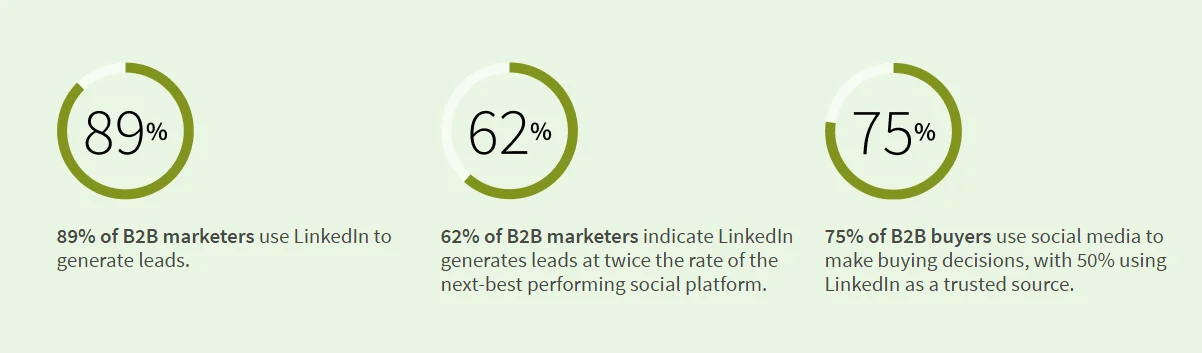
If your audience is on Instagram or TikTok, a broader management tool like Hootsuite or Sprout Social is a better fit, since LinkedIn-specific tools do you no good there.
Consider whether you sell to businesses or consumers. B2B teams typically get the most value from tools with great contact data, intent signals, and LinkedIn integration, such as Cognism, ZoomInfo, or Sales Navigator. B2C brands often benefit more from social media management and listening tools for Instagram, TikTok, and Facebook, such as Hootsuite or Sprout Social.
Team size and budget matter too. For example, a solo founder or small team might start with a free CRM tier or a single LinkedIn automation tool. At the same time, larger sales organizations can justify higher-cost platforms with custom data and reporting.
If you already use a CRM, check how well a tool integrates with it. Social selling tools that sync directly with Salesforce or HubSpot save your team from manually copying notes and contact details between systems.
If you’re in B2B social media sales or want to streamline your LinkedIn outreach, this video from Wiza will help you choose the right CRM integration that takes your social selling game to the next level.
Here are some of the important questions to ask before you commit to a specific tool:
In summary
To choose the best social selling tool, identify your target platforms, understand your business needs, and evaluate your budget and team size. You should also prioritize tools that connect directly to your CRM, allow for social listening, and automate prospecting.
Selling with social media is most effective when it’s consistent and authentic, and the right social selling tools can help you do that.
If you’re a B2B company focused on LinkedIn, start with LinkedIn Sales Navigator and then add on data or automation tools as you grow.
If you sell to consumers across Instagram, TikTok, or Facebook, Hootsuite or Sprout Social will handle management and listening for you.
But no matter which tools you use, the end goal should be the same: build real relationships first, establish trust, credibility, and positive sentiment before you start making a sales pitch or asking for money!
Social media marketing focuses on broadcasting content to a wide audience to build awareness. Social selling is more personal, involving a salesperson engaging directly with individual prospects, commenting on posts, and building a relationship over time.
No. Social selling tools help you find prospects, monitor signals, and engage on social media, but a CRM remains the central place where your sales pipeline, deals, and customer history live. The best setup uses social selling tools that sync with your CRM, so social activity feeds directly into your existing sales process instead of staying separate.
LinkedIn Sales Navigator is always worth the cost for B2B sales teams. The advanced search filters, lead alerts, and InMail credits make it easier to find and contact decision-makers than with a free LinkedIn account. If your buyers are on LinkedIn and your team is using it to prospect regularly, the Core plan will pay for itself through improved targeting alone.
Small Business Expo: 67% of SMBs Rely on Social Media Despite Mixed Results
Fine Media: Digital Marketing Statistics You Should Know in 2026
Brandwatch: Mastering Social Selling in 2026: Your Guide to Increasing Sales on Social Media
Hubspot: Why Social Shopping Could be the Future of E-Commerce
Salesforce: State of Sales Report
LinkedIn. Sell: Social Selling: Definition, Benefits & Tips for Sales Leaders
HubSpot: 51 Tips for Social Selling on LinkedIn and Beyond

Running an e-commerce business is no small task, and we all know how quickly things can go sour if y...

When it comes to retail marketing, having the right software makes all the difference. With so many ...

Unlike other sectors, e-commerce marketers must not only attract traffic but also convert visitors, ...

Enroll in our free 5-lesson email course today!
Free for limited time only.