

An Amazon product launch is the structured process of introducing a new product using coordinated tactics, like keyword targeting, listing optimization, paid ads, promotions, and conversion rate optimization, to drive early sales and visibility.
Done right, it generates immediate revenue while boosting rankings, building reviews, and improving conversion rates.
These early gains compound over time, lowering acquisition costs, strengthening brand presence, and creating a scalable foundation for sustained growth across your entire product portfolio.
So, how, exactly, do you plan and run a successful Amazon product launch?
To find out, we consulted the Amazon product launch experts at Olifant Digital, a leading full-service Amazon marketing agency with an impressive track record of Amazon launch successes.
In this guide, we break down the key strategies to use, along with expert insights from Olifant, and some verified real-world case studies to show you just how impactful a well-executed product can be – for brands like yours!
An Amazon product launch involves numerous strategies, deployed across the three distinct phases of a product launch:
To successfully launch a new product on Amazon, you need to work through each phase, building on what you did in the previous one.
Using the right strategies, at the right time, will help you gain sales for the new product, establish organic ranking for the listing, and build meaningful, incremental, growth for your business.
These are the most important strategies to use when you’re launching a new product on Amazon, broken down to align with each of the three phases:
The Pre-Launch phase is where the commercial viability of your Amazon product is determined, and the foundations for performance are built.
Done correctly, this stage reduces execution risk, shortens time-to-rank, and materially improves your return on ad spend once you go live.
In practical terms, you are aligning three core factors before launch: demand (is there a market?), conversion (will the listing sell?), and infrastructure (are you ready to drive and capture traffic?).
The objective of the pre-launch phase is to enter the launch phase with:
This is the analytical backbone of your launch. You are looking to confirm that demand exists, competition is surmountable, and your unit economics can sustain paid acquisition.
Start with keyword-led demand analysis. Identify your primary and secondary keywords, then map:
From there, conduct a competitive deep dive:
Finally, validate the financial model:
By doing these, you can exit this step with a clear go/no-go decision, a defined target keyword set, and a differentiated market position that will guide your listing and marketing.
Amazon’s algorithm rewards product listings that convert, so your listing must be engineered to turn traffic into sales from day one.
Think of your listing as a conversion funnel, not just a product page. Every element should reduce friction and reinforce value.
Core components of an optimized listing:
A conversion-optimized listing is one that is ready to capitalize on traffic. This becomes the engine that turns paid and organic visibility into revenue and ranking signals.
Check out this video by Crescent Kao for more on how to create an optimized Amazon listing page:
With the listing built, the next step is to ensure you can generate and manage traffic at scale from day one.
Your Amazon PPC campaign setup should be structured for both data acquisition and performance control. Create a simple dashboard to track CVR, CPC, ACoS, and keyword ranking from day one.
Include both auto campaigns (for discovery) and manual campaigns, segmented by:
Define initial bids based on expected CPC ranges and your break-even ACoS, but keep budgets flexible for rapid scaling.
This video by Mina Elias provides a comprehensive guide to setting up your Amazon PPC campaigns:
Plan your promotions and launch offers in advance and pre-schedule them for your launch. Use a combination of coupons or percentage discounts, limited-time deals to create urgency, and price anchoring (higher list price vs. discounted launch price) to help increase conversion rates and accelerate early sales velocity.
Reviews and social proof are hugely impactful on Amazon. When you launch a new product, it’s essential to (ethically) gather as many reviews as you can, as quickly as you can!
To help you do this, you can:
The majority of your traffic will be from Amazon PPC but you can add valuable momentum with traffic from external sources like:
Plan and prepare the external channels you will use, create the content and generate the tracking links to measure performance and attribution.
Ensuring you have enough stock to keep up with demand is critical! Ensure that you forecast demand based on your launch plan, include buffer inventory for best-case scenarios, and take FBA check-in timelines into account.
The Pre-Launch phase directly determines how efficiently you can drive ranking during launch:
Done right, the pre-launch phase sets up a fully operational launch system where traffic, conversion, and fulfillment are synchronized and ready to go.
A strong Pre-Launch phase means you enter the market properly positioned to generate the sales velocity and keyword relevance signals required to win on Amazon.
At this stage, your objective is not simply to go live and start selling but to gain sales velocity, accelerate keyword indexing, and establish organic ranking within Amazon’s algorithm.
This phase is highly dynamic and execution-sensitive. Even small inefficiencies in traffic, conversion, or pricing can materially impact performance.
Think of the Launch Phase as being all about signal generation. Amazon’s ranking system responds to a combination of relevance (keyword targeting), performance (conversion rate), and momentum (sales velocity).
Your role is to orchestrate these signals in a coordinated way so that your product earns visibility for high-value search terms as quickly as possible. You are simultaneously driving traffic, testing assumptions, and optimizing in real time. Speed and responsiveness are critical.
At launch, your first priority is to maximize visibility across relevant keywords. Without sufficient traffic, you cannot generate the sales signals required for ranking.
Amazon PPC is the primary driver here, and your campaigns should already be structured from the Pre-Launch phase.
Now, the focus shifts to activation and controlled scaling:
The objective is to establish market visibility and keyword indexing, ensuring your product is discoverable across relevant search queries.
Monitoring impressions and click-through rate (CTR) daily, identify which keywords are indexing (i.e., your product appears in results), and gradually shift budget towards the keywords that show early traction.
Your conversion rate (CVR) is not only essential for revenue and ROI. It is also an important signal for the Amazon algorithm, which rewards high-converting listings.
During your launch, it is vital to establish and maintain a competitive CVR. Even with strong Pre-Launch preparation, real customer behavior often reveals gaps and opportunities for optimization.
This means monitoring and testing the various elements that can lower your CVR, which commonly include:
The objective is a continuously improving conversion rate, which lowers your effective cost per acquisition and strengthens your ranking signals.
While Amazon PPC is the core engine, external traffic can act as a ‘force multiplier’, especially in the early launch window, so now is the time to activate the external channels defined in the pre-launch phase.
External traffic is particularly valuable when it converts well (high-intent audiences), is timed alongside promotions or discounts, and supports spikes in demand that reinforce momentum.
Prioritize quality over volume. Poorly converting traffic can hurt performance.
Reviews are a critical input into both conversion rate and long-term ranking stability.
During launch, your objective is to establish an initial base of authentic, positive reviews as quickly as possible.
While the mechanisms for capturing reviews should be established in the pre-launch phase, it is critical to make sure those mechanisms are active from the moment you start making sales.
Be proactive. Ask for feedback and reviews. Monitor returns and negative feedback closely. Address issues before they escalate into poor reviews.
This video by Crescent Kao will help you get authentic reviews, quickly:
The Launch Phase is inherently data-driven. You should be making frequent, high-confidence adjustments based on real-time performance signals.
The core performance metrics to track include:
Use these metrics to make data-informed optimization decisions. Double down on what’s working and scale budgets on high-performing keywords or listings.
Establish a daily monitoring cadence during the first 2–4 weeks (longer if you can) and make incremental adjustments rather than sweeping changes.
The aim is to create a tight feedback loop that enables continuous performance improvement and a faster path to ranking stability and good organic performance.
The Launch Phase is where you generate the data and momentum required for long-term optimization:
A strong launch doesn’t just generate immediate sales and get your new products moving; it also establishes a performance baseline that the Post-Launch phase can further optimize and scale profitably.
By this point, your product should have achieved initial keyword indexing, generated consistent sales velocity, and accumulated a base level of reviews.
The objective now shifts from aggressive acceleration to efficiency, defensibility, and scale. This phase is often where the real margin is made.
Many sellers can generate early sales through heavy ad spend and promotions, but few successfully transition to organic ranking, optimized conversion, and disciplined advertising working together to drive profitable growth.
The Post-Launch phase is about building that system. At a strategic level, you are refining and expanding three core factors:
During launch, PPC is intentionally aggressive. Post-launch, the focus shifts to efficiency and control, specifically, improving ACoS and TACoS while maintaining (or growing) sales volume.
You can optimize your Amazon PPC campaigns through:
The aim is to build a more efficient advertising engine that supports growth without eroding profitability.
Run weekly search term audits, segment campaigns by performance tiers (scale, maintain, cut), and align bids with your target ACoS and contribution margin.
With traffic flowing and data accumulated, you can now systematically improve your listing to increase conversion rate and revenue per visitor.
How to optimize your Amazon listings and CVR:
The goal is a higher-converting listing that increases both organic and paid performance efficiency.
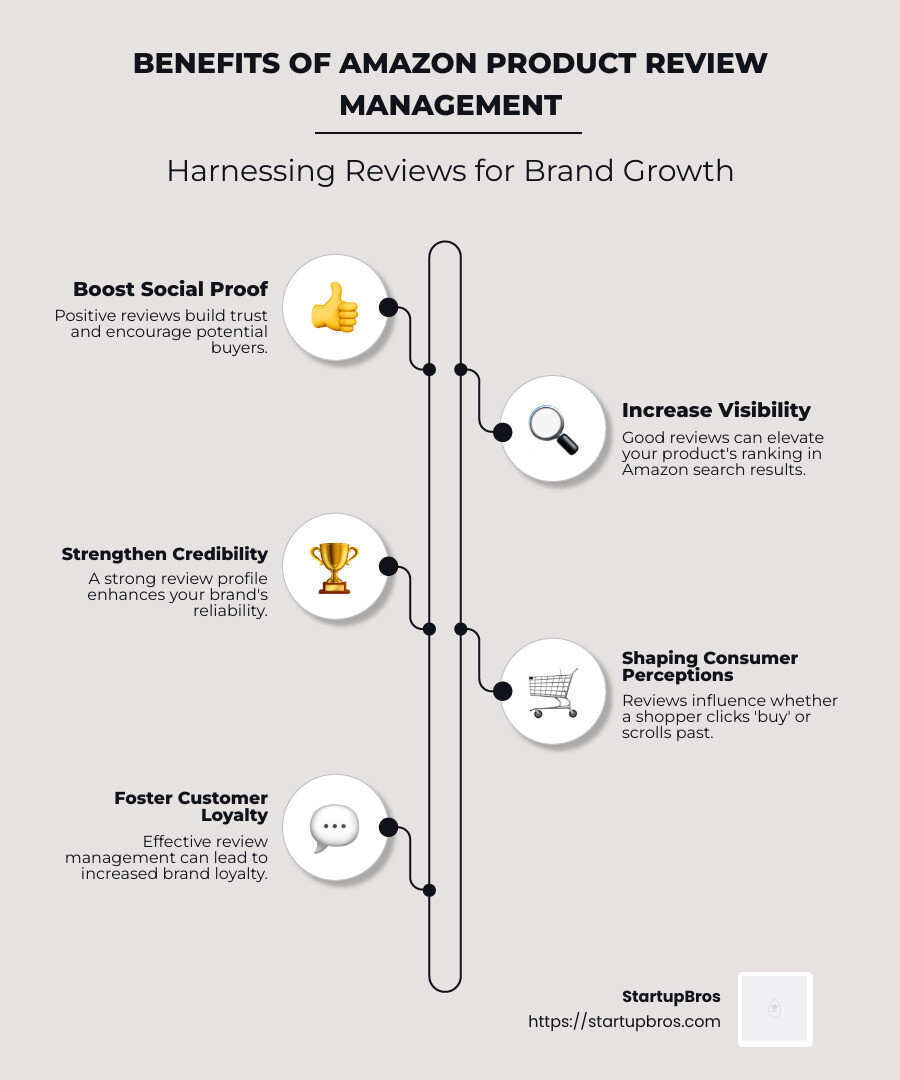
Reviews become increasingly important as you scale. They influence not only CVR but also your product’s long-term credibility and performance within the category.
How to gain and maintain your Amazon reviews:
Ultimately, you want a strong, credible review profile that reinforces trust and supports higher CVR at scale.
Once you have established rankings for your core keywords, the next step is to expand your keyword footprint and capture additional demand.
You can do this through:
You’re aiming for broader search visibility and incremental revenue streams from previously untapped queries.
Use your PPC campaign data to identify new keyword opportunities and expand campaigns methodically, to avoid diluting performance with overly broad targeting.
Post-launch, all the elements established during the product launch come together, strengthening your business and your brand overall.
If the Launch Phase shows that your product can win, the Post-Launch phase ensures that it continues to win – profitably, consistently, and at scale.
It also represents a repeatable system. The insights, data, and infrastructure you build here can be applied to future product launches, compounding your effectiveness over time.
The following real-world case studies from Olifant Digital show just how impactful a well-planned and properly executed Amazon product launch can be:
Beauty by Earth is a fast-growing, eco-conscious skincare brand offering natural, non-toxic beauty products across multiple categories.
With over 100 ASINs, a strong base of loyal customers, and thousands of good reviews, the brand had already established a solid presence in the competitive beauty space.

Despite strong growth, the brand’s Amazon PPC was managed internally and lacked structure, scalability, and clear performance tracking.
As complexity increased, it made it difficult to control profitability, identify opportunities, and sustain growth in a highly competitive category.
Olifant conducted a full audit and restructured the ad account using a clear campaign framework organized by ASIN, match type, and targeting strategy.
They deployed a multi-layered PPC approach that included keyword targeting, competitor targeting, and video ads, while introducing weekly TACoS reporting to improve performance visibility, budget allocation, and profitability.
This approach was then applied to the launch of five new products, which drove impressive results and augmented their overall efforts.
The new strategy drove a 27% increase in monthly Amazon revenue and successfully launched five new products, each scaling to significant revenue levels.
Performance improved through higher ROAS, reduced wasted ad spend, and better visibility into profitability across the entire catalog.
Read the full case study here: Olifant Digital – Beauty by Earth Case Study
Here is what you can incorporate into your own product launch strategy:
Oneroot is a premium honey brand focused on high-quality, sustainably sourced products for health-conscious consumers.
With strong roots in its home market, the brand combines ethical beekeeping with a positioning centered on purity, flavor, and wellness.

Despite early success, growth had plateaued, and ad profitability was declining, limiting the brand’s ability to scale.
At the same time, expansion into international markets, particularly Japan, introduced cultural and operational complexity.
A poor harvest also constrained inventory, putting additional pressure on sales velocity and margins.
Olifant implemented a strategy focused on profitable, demand-responsive growth:
This approach balanced growth with efficiency, even under supply constraints.
The strategy delivered a 40% increase in Amazon revenue while successfully launching products and expanding into international markets.
Despite limited inventory, the brand maintained strong profitability, improved ad efficiency, and strengthened its global positioning as a premium honey brand.
Read the full case study here: Olifant Digital – Oneroot Case Study
Here is what you can incorporate into your own product launch strategy:
Wedge Guys is a leading golf brand on Amazon, offering high-quality products designed by PGA professionals.
Positioned as both performance-driven and accessible, the brand had strong fundamentals but needed a more scalable and profitable growth strategy.

The brand was losing visibility in a competitive category. PPC campaigns were inefficient and unprofitable, organic rankings were declining, and competitors with stronger creatives and pricing were outperforming them, making sustainable growth difficult.
Olifant implemented a precision-focused, profitability-driven strategy:
This approach improved both traffic quality and conversion efficiency.
The strategy delivered a $305K+ increase in monthly Amazon revenue, a 17% reduction in ACoS, and top category rankings, including Amazon’s Choice and Best Seller status, re-establishing Wedge Guys as a market leader.
Read the full case study here: Olifant Digital – Wedge Guys Case Study
Here is what you can incorporate into your own product launch strategy:
A successful Amazon product launch doesn’t end with first sales; it evolves into a system for sustained growth.
By executing each phase with discipline and using data to guide decisions, you can move from initial traction to long-term profitability.
The strategies, case studies, and expert tips in this guide are designed to help you do exactly that: launch with precision, optimize with confidence, and scale with consistency.
Yes. PPC is the primary driver of visibility and keyword indexing. Without it, gaining traction organically is significantly slower and less predictable. Read the full guide to learn how to use Amazon PPC campaigns during a product launch.
Critical. Reviews directly impact conversion rate and trust. Even a small number of high-quality reviews can significantly improve performance early on. Read the full guide to learn more about how to get reviews on Amazon for a new product, and how to manage your reviews as you grow.
Yes. Strategic promotions can boost conversion rates and sales velocity, helping accelerate ranking, especially in competitive categories. Read the full guide to learn more about the types of promotions you can use during an Amazon product launch.
Immediately, but cautiously. Begin with data collection, then refine bids, keywords, and budgets after enough performance data is available (typically within 1–2 weeks). Read the full guide to learn how and when to optimize your PPC campaigns during a product launch on Amazon.
You transition into optimization and scaling, focusing on improving PPC efficiency, increasing conversion rates, expanding keyword coverage, and growing your product line for long-term profitability. Read the full guide for more on how to optimize and continue scaling your business after the launch phase of your new product launch.
Amazon: New Product Launch: Definition, Checklist, and Examples
Amazon Ads: Performance Metrics
Olifant Digital: Best Amazon Agency for Product Launches: Why Most Fail & What Senior Teams Do Differently

The automotive industry is flooded with competitors, and it takes a unique edge to engage and conver...

Breaking into the mainstream fashion industry can be tricky, to say the least. And if you want to ma...

The fashion industry is one of the most densely saturated, competitive, and dynamic industries to br...

Enroll in our free 5-lesson email course today!
Free for limited time only.