

Unlike other sectors, e-commerce marketers must not only attract traffic but also convert visitors, increase average order value, and drive repeat purchases; all while competing in a crowded digital marketplace.
It is a fast-paced, highly measurable discipline where every click, interaction, and purchase matters!
So, how do expert e-commerce marketers do it? What sets them apart, and what strategies do they use?
To find out exactly what it takes to succeed, we consulted the marketing experts at Omnisend, a leading omnichannel marketing platform for e-commerce brands.
This guide brings together the most impactful e-commerce marketing strategies, drawing on insights from Omnisend’s recent research report, which analyzed data from over 700 agencies, managing nearly 3,000 e-commerce brands (representing the top 10% of the best-performing agencies in Omnisend’s agency partner network).
These real-world findings highlight how expert agencies maximize revenue through automation, segmentation, testing, and multi-channel campaigns, providing a proven blueprint for e-commerce success.
Let’s dive into how these strategies work and how they can work for you!
Marketing for e-commerce differs from other sectors because it is directly tied to immediate, measurable revenue outcomes.
It operates in a high-intent, low-friction environment where users can discover, evaluate, and purchase in a single session.
This makes performance metrics like conversion rate, average order value, and return on ad spend central to decision-making.
As a result, e-commerce marketing places a much stronger emphasis on conversion rate optimization (CRO) and data-driven experimentation, across all stages of the sales journey.
It also relies more heavily on full-funnel integration and speed of execution. Channels like email, SMS, paid media, and social proof must work together seamlessly to drive traffic, convert users, and retain customers.
According to Omnisend’s research, top-performing e-commerce agencies don’t rely on a single tactic, but drive results through consistent execution across channels, automation, and optimization.
With this in mind, let’s take a look at some of the best strategies for e-commerce marketing:
The best marketing strategies for e-commerce work together across the full sales funnel to gain traffic, increase conversions, boost customer retention, and amplify your marketing and sales revenue over time.
Here are the essential strategies to focus on:
Email marketing automation uses triggered, behavior-based emails to engage customers automatically.
It delivers consistent, personalized communication at scale, driving conversions and repeat purchases with minimal manual effort.
Omnisend found that the top e-commerce agencies move beyond one-off campaigns to always-on automated systems, with 45% of total email revenue coming from automations and automated messages earning nearly 9x more per message ($5.96 vs $0.67) than one-off campaigns.

You can integrate automation into your email marketing by setting up core flows triggered by user actions, including welcome series, abandoned cart, and browse abandonment, post-purchase follow-ups, replenishment reminders, and win-back campaigns.
Segment audiences based on purchase history, browsing behavior, and engagement, and use dynamic content such as product recommendations to increase relevance.
Optimize subject lines, timing, and frequency through testing, and integrate your email platform with your e-commerce system (e.g., Shopify) for real-time data syncing.
SMS complements email for time-sensitive, high-impact messages, with Omnisend reporting agencies using SMS see 202% more revenue.
By treating automation as core infrastructure, brands can continuously engage customers, improve conversion rates, increase lifetime value, and reduce reliance on paid channels.
Tracking key marketing metrics and conducting regular A/B tests are essential for e-commerce.
Start by defining key metrics aligned to your goals, such as conversion rate, revenue per visitor, ROAS, and customer lifetime value.
Use analytics platforms (like Google Analytics, Shopify Analytics, or your email/paid media dashboards) to track these metrics in real-time.
In their analysis, Omnisend found that regular A/B testing correlates with up to 192% higher revenue, reinforcing the importance of testing and optimization.
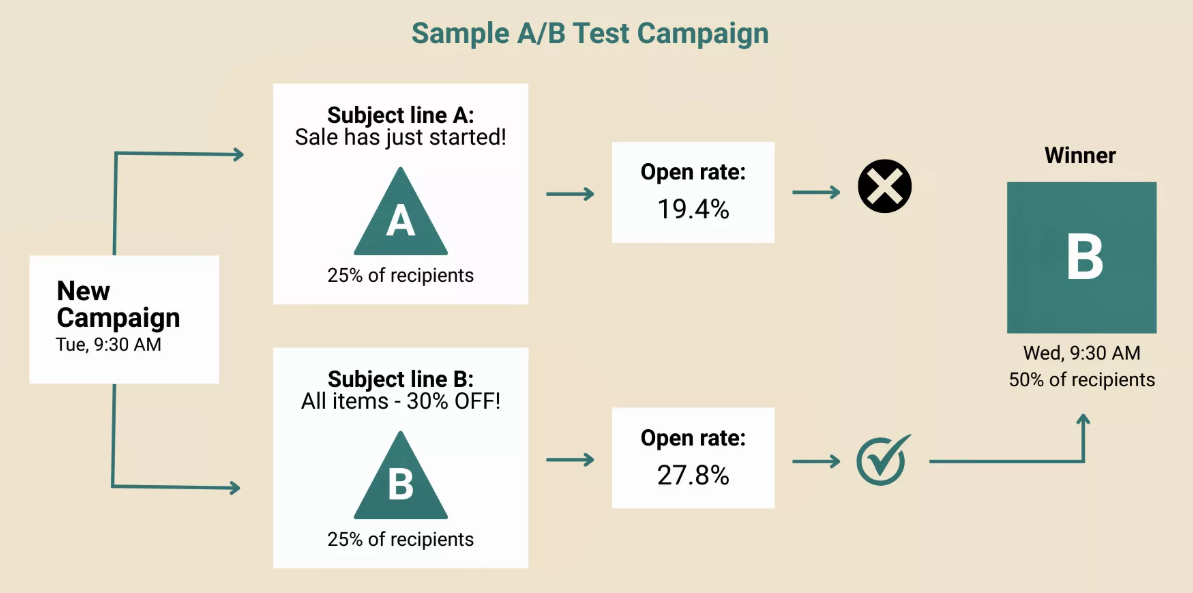
Implement A/B testing on critical touchpoints such as landing pages, product pages, checkout flows, email subject lines, and ad creatives.
Test one variable at a time, run experiments long enough to reach statistical significance, and implement the winning variant.
Continuously iterate, learn from results, and prioritize tests with the highest potential impact.
This strategy ensures that both your traffic and conversions are maximized efficiently, and that marketing decisions are backed by evidence rather than intuition.
SEO for e-commerce brands is critical because it brings in consistent, high-intent users actively searching for products.
Optimizing for product-related search queries drives high-intent, low-cost traffic that compounds over time. Focus on keywords with commercial and transactional intent (e.g., “best running shoes for flat feet” or “buy protein powder online”).
Optimize category and product pages with clear titles, descriptions, and structured data, and build supporting content, such as buying guides and comparisons, that link to product pages.
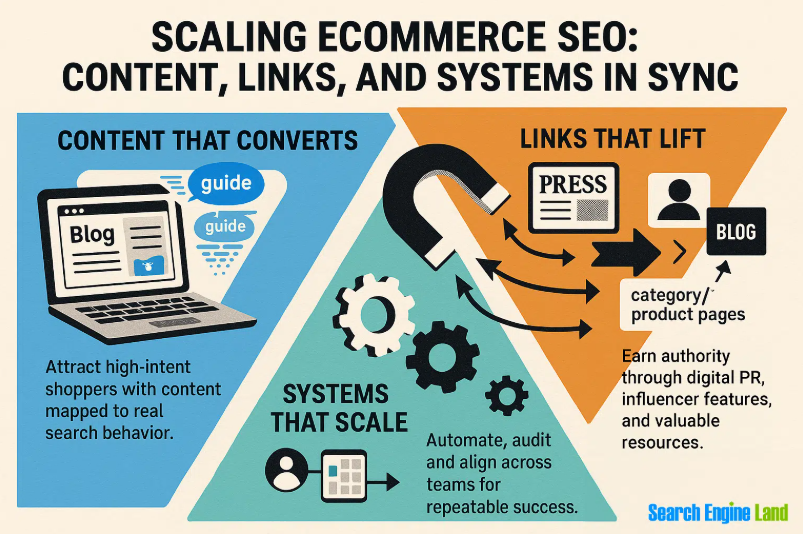
Ensure strong technical foundations (site speed, mobile usability, crawlability). Use internal linking to connect content, categories, and products.
Over time, this builds sustainable traffic and reduces reliance on paid channels.
Paid advertising channels drive traffic and sales. Profitable campaigns enable fast, scalable growth, and ad performance tracking allows you to continuously refine your campaigns.
Run campaigns across channels like search and social, focusing on audience targeting and creative testing.
Use separate strategies for prospecting (new customers) and retargeting (previous visitors).
Continuously test ad creatives, especially short-form video and UGC-style content, to improve performance.
Optimize campaigns based on metrics like ROAS and conversion rates. Scale budgets on high-performing campaigns and pause underperforming ones.
Paid media works best when paired with strong CRO to make the most of the traffic generated.
Partnering with creators to promote your products to their audience builds awareness and trust through authentic content, and influences purchasing decisions.
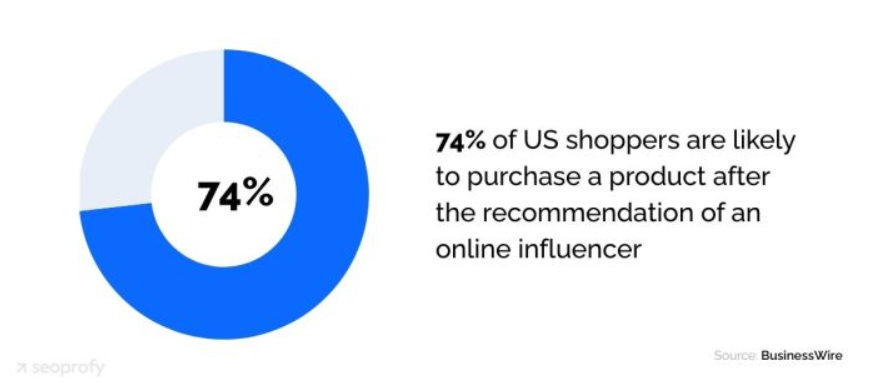
Work with creators whose audience aligns with your target market and prioritize micro-influencers for higher engagement.
Focus on generating authentic content rather than just reach. Influencer videos, reviews, and demonstrations perform best. Provide clear briefs but allow creative freedom for authenticity.
Track performance using unique links or discount codes and repurpose high-performing creator content into paid video ads and on-site assets.
This strategy is especially effective for generating UGC that supports both acquisition and conversion.
Conversion Rate Optimization (CRO) is the process of improving your website to increase the percentage of visitors who make a purchase.
It is important because it maximizes the value of your existing traffic and primes your pages to convert new traffic.
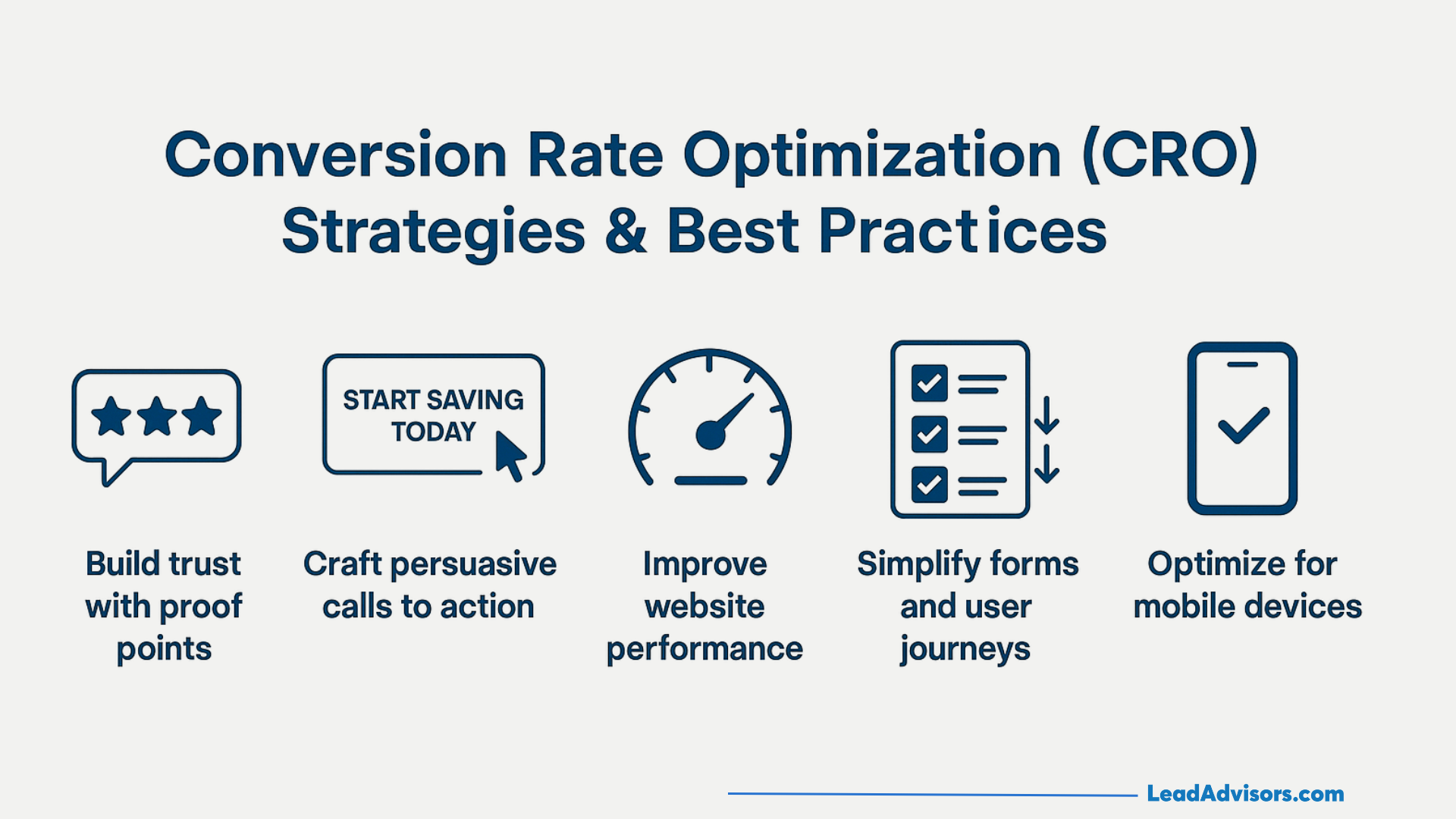
Optimize product and landing pages with clear value propositions, strong visuals, and persuasive copy.
Simply the checkout process by reducing the number of steps involved, and offer trusted payment options.
Use trust signals such as reviews and guarantees. Test elements like headlines, layouts, and calls-to-action through A/B testing.
Prioritize mobile optimization, as most e-commerce traffic is mobile. The key to improving performance over time is to continuously test and learn.
Social proof is the psychological principle that people are more likely to take an action when they see others doing the same.
In e-commerce, it reduces perceived risk by showing that real customers have already purchased, used, and validated your product. Online shoppers cannot physically experience a product, so social proof plays a critical role in influencing purchase decisions.
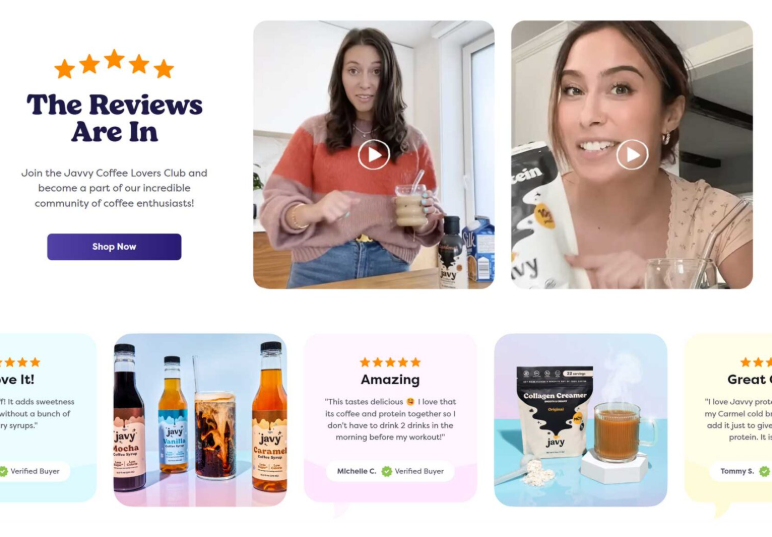
Ratings and customer reviews are two of the most common form of social proof for e-commerce sites.
They provide credibility, answer common objections, and help set expectations around quality, fit, or performance. A strong volume of positive, recent, and verified reviews can significantly increase conversion rates.
User-generated content (UGC) refers to any content created by customers rather than the brand, including photos, videos, unboxings, testimonials, and social media posts.
UGC is particularly powerful because it shows products in authentic, relatable, real-world contexts.
To leverage social proof and UGC effectively:
Check out this video by Marin Istvanic on YouTube for more on how you can use UGC for your e-commerce advertising:
Consistent collection and strategic placement of reviews and UGC builds trust at every stage of the funnel – ultimately increasing conversions, reducing hesitation, and driving stronger overall sales performance.
Once users convert, personalization increases basket size and satisfaction.
Personalization means tailoring the shopping experience based on user behavior and preferences. It is important because it increases average order value (AOV) and conversion rates.
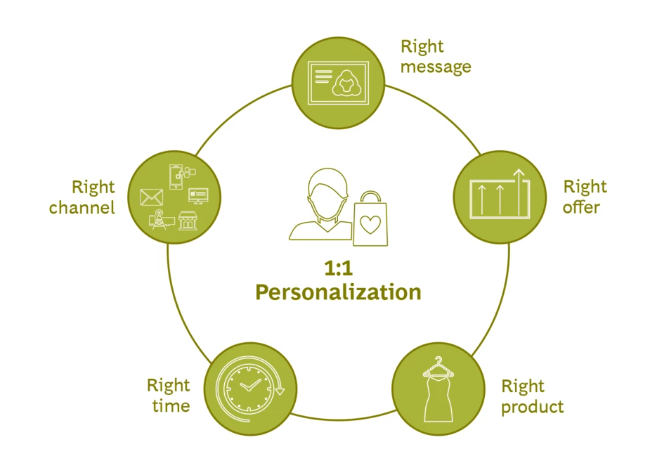
Use data to deliver relevant product recommendations (e.g., “frequently bought together” or “you may also like”).
Personalize on-site experiences based on browsing or purchase history.
Segment users for targeted messaging across email and SMS.
Optimize navigation, search, and filtering to help users find products quickly and ensure a seamless, mobile-first experience.
Effective personalization makes the buying journey more relevant, which drives larger baskets and higher satisfaction.
Referral and loyalty programs incentivize customers to refer others or make repeat purchases. They reduce customer acquisition costs and increase retention.
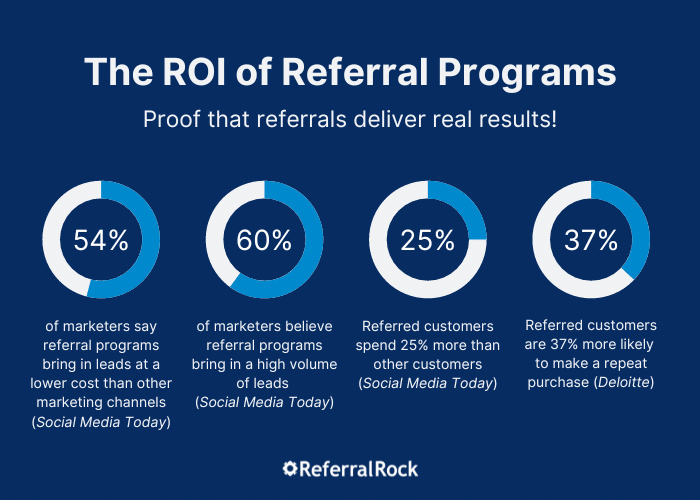
Create referral programs that reward both the referrer and the new customer (e.g., discounts or credits).
Build loyalty programs with points, tiers, or exclusive perks to encourage repeat purchases. Track participation and optimize incentives over time.
Promote these programs across your website, email, and post-purchase flows. Keep the mechanics simple and the rewards meaningful.
These programs help turn satisfied customers into a scalable growth channel!
Marketplace optimization is the process of improving product visibility and sales on third-party platforms like Amazon, Etsy, or Walmart.
These platforms provide built-in, high-intent demand and can act as an additional revenue channel beyond your own website.
Optimize product listings with keyword-rich titles, bullet points, and high-quality images.
Continuously generate reviews to improve ranking and trust. Use marketplace ads to increase visibility and focus on ranking for high-intent search terms within the platform.
Monitor performance metrics such as conversion rates and ACoS to refine your strategy.
This approach is most relevant for brands looking to expand beyond DTC and capture demand within established marketplace ecosystems.
As your e-commerce business grows, marketing quickly becomes more complex. What starts as a handful of campaigns across paid media or email can evolve into a multi-channel system requiring constant optimization, technical integration, and data analysis.
This is typically the point where working with a specialist agency becomes valuable, not just to execute campaigns, but to build scalable, revenue-generating systems.
Insights from Omnisend’s agency report reinforce this shift. Top-performing agencies are not focused on one-off campaigns; they build an always-on marketing infrastructure, particularly across email and SMS.
With nearly half of email revenue coming from automation and significantly higher returns per automated message, it’s clear that performance comes from structured, data-driven systems rather than ad hoc activity.
“What separates top agencies isn’t one big decision, but a compounding effect of small ones. Adding a channel, running tests, improving workflows — over time, those add up to much stronger results.”
If your team lacks the time or expertise to implement and optimize these systems, an agency can accelerate your progress and get you set up for success, the right way.
You should also consider an agency when you are investing meaningfully in paid acquisition but not seeing efficient returns.
Agencies bring cross-channel expertise, aligning paid media, lifecycle marketing, CRO, and analytics, to ensure traffic converts and retention is maximized.
Without this coordination, brands often overspend on acquisition while underutilizing existing customers.
Finally, an agency becomes particularly valuable during periods of transition: scaling rapidly, entering new markets or channels, or implementing new platforms (such as marketing automation or CRM systems).
In these scenarios, execution speed and strategic clarity matter. Specialist e-commerce agencies provide both, which will help you avoid costly inefficiencies while unlocking sustainable, long-term growth.
E-commerce marketing is not a one-size-fits-all endeavor. It requires a strategic, multi-channel approach tailored to your audience and business model.
By applying best practices such as CRO, personalized automation, customer loyalty programs, and performance testing, brands can optimize every stage of the buyer journey.
The Omnisend report underscores a key lesson: top-performing agencies achieve exceptional results by combining automation, segmentation, testing, and consistent execution.
Learning from these experts and applying these strategies to your own brand can drive higher conversions, greater customer lifetime value, and sustained revenue growth.
In a competitive e-commerce landscape, the brands that measure, test, and iterate continuously are the ones that thrive.
E-commerce marketing is the process of driving traffic to an online store, converting visitors into customers, and retaining them over time. It includes channels such as SEO, paid ads, email, SMS, social media, and conversion rate optimization.
The most impactful channels typically include SEO, paid media (Google and social ads), email and SMS marketing, and social media. The right mix depends on your product, margins, and target audience.
E-commerce marketing is more data-driven and performance-focused. It emphasizes measurable outcomes like conversions, revenue, and customer lifetime value, with faster testing and optimization cycles.
CRO is the process of improving your website to increase the percentage of visitors who take a desired action, such as making a purchase. It involves testing elements like product pages, checkout flows, and calls to action.
Reviews and social proof build trust and reduce purchase hesitation. They show potential customers that others have had positive experiences, which can significantly increase conversion rates.
Email and SMS are critical for retention and repeat sales. Automated flows like abandoned cart reminders and post-purchase follow-ups can generate consistent revenue with high ROI.
A/B testing compares two versions of a webpage, email, or ad to determine which performs better. It helps optimize conversion rates and improve marketing performance through data-driven decisions.
You may need an agency when your marketing becomes too complex to manage in-house, or when you want to scale faster. Agencies bring specialized expertise, tools, and proven strategies to improve performance across channels.
Baymard Institute: Cart & Checkout Usability Research
Omnisend: Inside the Top 10% of E-commerce Marketing Agencies Report
Search Engine Land: Ecommerce SEO: Start Where Shoppers Search
SEOprofy: 65 E-commerce Marketing Statistics for 2025-2026

Breaking into the mainstream fashion industry can be tricky, to say the least. And if you want to ma...

The automotive marketing environment is extremely competitive and highly targeted. Businesses should...
To be successful on Amazon, you need a great Amazon PPC marketing strategy. Amazon’s own data ...

Enroll in our free 5-lesson email course today!
Free for limited time only.