

An optimized Google Business Profile is one of the most powerful drivers of local visibility, trust, and conversions.
It determines whether your business appears in the Map Pack, how compelling it looks when it does, and ultimately how many choose your business over your competitors.
So, how do you actually optimize it in a way that improves rankings and drives real inquiries?
This step-by-step guide will help you optimize your Google Business profile from start to finish.
We’ve broken down every key optimization area into clear, actionable steps you can implement immediately – and maintain over time to boost your local search ranking and increase your conversions!
Your Google Business Profile (GBP) is a critical component for a good local SEO strategy and the basis for all your Google Local Services ads.
It directly influences whether your business appears in the local Map Pack, which is the set of listings shown above the organic results for local-intent searches.
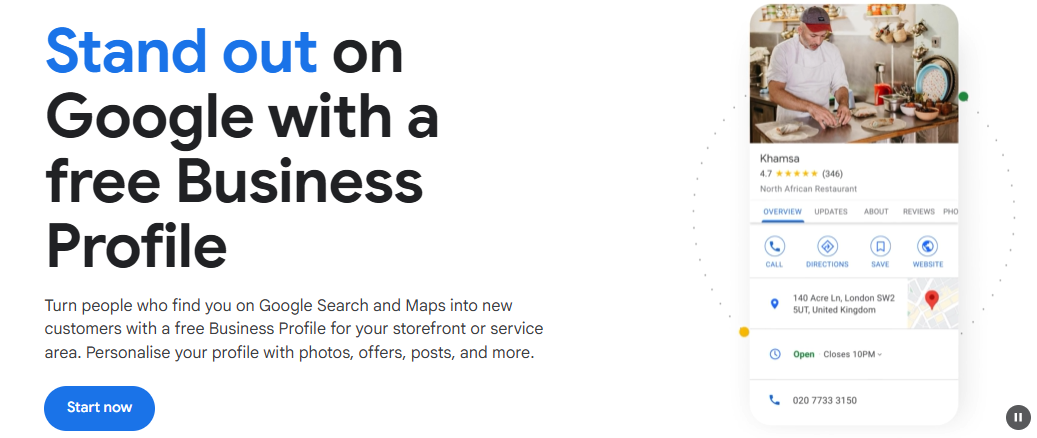
GBP listings appear for searches with local intent, such as:
When users search for services near them, Google prioritizes GBP listings over traditional web pages. A well-optimized profile increases your chances of appearing in these high-visibility positions.
Google uses your GBP data to match your business with relevant local searches and shows the most relevant results in its Map Pack, which appear at the very top of the page.
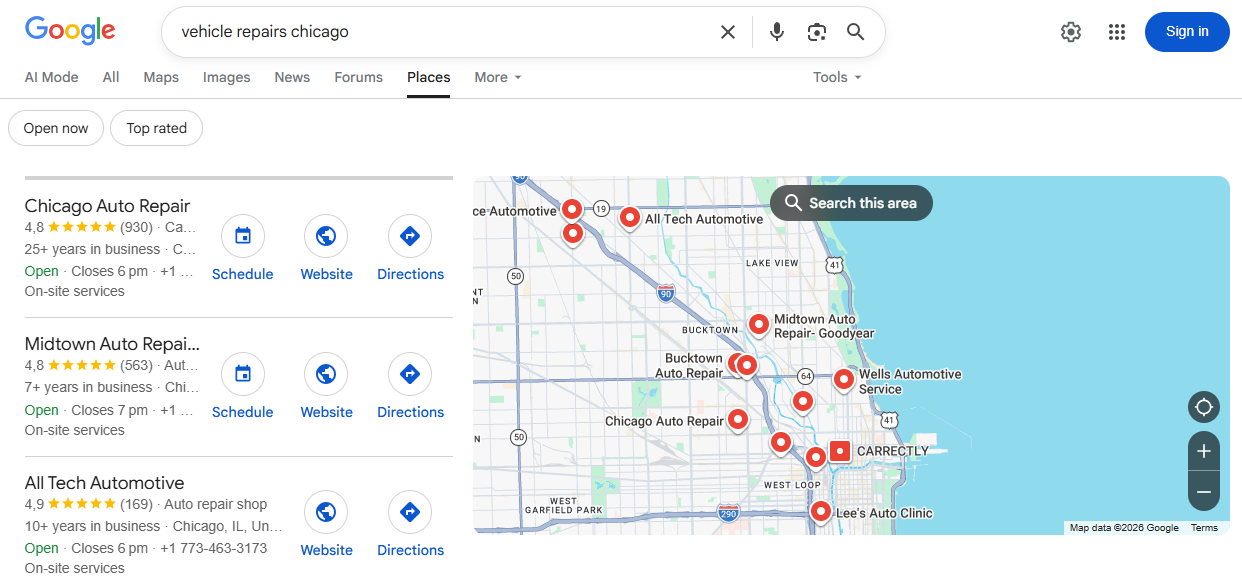
It pulls key information such as categories, services, reviews, and location.
Businesses with complete and accurate profiles are easier to match to searches, and active profiles also signal higher quality and reliability.
Google evaluates three primary factors when ranking local businesses:
Here is how each factor affects your ranking, and how to optimize your GPB for each one:
Relevance measures how well your profile matches a search query.
You can improve relevance by:
Clear, structured information helps Google understand what you offer.
Distance reflects how close your business is to the searcher or the location in the query.
You cannot directly control proximity. However, you can:
Google uses this data to determine if your business is a good geographic fit for the search.
Prominence measures your business’s authority and trust signals.
Key drivers include:
Google states that strong review signals can improve local rankings and visibility.
This is a simple, step-by-step guide to optimizing your Google Business profile, including some advanced tips and pitfalls to avoid:
A strong foundation ensures your profile is eligible to rank and perform. Errors at this stage limit visibility, regardless of later optimization.
You must claim and verify your business before making any meaningful updates. Verification confirms that you control the listing.
Google offers several verification methods, including:
Next, configure your business type correctly. This affects how your profile appears in search.
Choose the correct type. Misclassification can limit visibility or lead to suspension.
Start with your Name, Address, and Phone number (NAP). This information must match your website and other listings exactly and must be consistent across all citations.
Check out this short video by Moz to understand the importance of consistent NAP citations and formatting:
Set your business hours carefully. Include:
Incorrect hours lead to poor user experience and negative reviews, which will hurt your rankings over time.
Add your website link and ensure it points to the most relevant landing page.
This improves both conversion rates and keyword relevance.
If your business operates in multiple locations, create separate listings for each legitimate location.
Each profile must represent a real, staffed presence.
Avoid creating listings for:
These violate Google’s guidelines and risk suspension.
Scaling introduces governance challenges. You must maintain:
Without governance, profiles drift. This reduces ranking consistency and brand trust.
A structured foundation ensures every location performs predictably and remains compliant.
Each field in your Google Business Profile contributes to how Google understands and ranks your business.
Accurate, complete, consistent, structured data improves relevance and visibility.
Your primary category is the most important ranking signal in your profile. It tells Google what your business does.
Select the closest possible match to your core service. Avoid broad or generic categories.
You can add secondary categories to capture additional services. However, only include categories that accurately reflect your offerings.
Conduct competitive analysis to refine your choices:
Category alignment directly impacts which searches trigger your listing.
Your business description does not directly influence ranking, but it does affect user engagement and conversions.
Write a clear, structured description:
Keep sentences short and specific. Focus on clarity over keyword density.
You can include keywords naturally, but avoid stuffing. Google may reject or limit visibility for low-quality descriptions.
Services and products help Google match your profile to specific queries.
Add a complete list of services and break them into individual entries where possible. This allows you to target more granular keywords.
To improve relevance for long-tail searches, use clear naming conventions, such as:
Map each service and keyword to search intent:
This alignment improves both visibility and conversions.
Google Business profile attributes are predefined labels that describe specific features of a business, such as accessibility, amenities, and service options, to help customers quickly understand what the business offers.
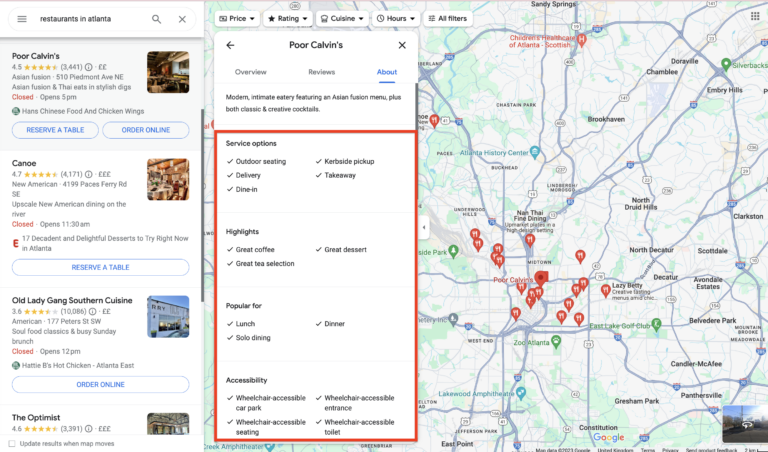
They provide additional context about your business, help users make decisions and improve search match quality.
Select all relevant attributes, but remain accurate. Misleading information can result in user complaints or profile issues.
You should also configure available features, such as:
These features enhance user experience and increase conversion rates. Fully optimizing these fields ensures your profile is both discoverable and actionable.
Location is a core component of local search rankings. Google uses it to determine whether your business is a relevant result for nearby users.
You cannot control proximity directly. However, you can structure your profile to maximize geographic relevance.
Your physical address plays a central role in local rankings. Google uses it to calculate the distance between your business and the searcher.
Choosing the correct business type is critical for accurate visibility.
For storefront businesses, always:
For service-area businesses (SABs), you can hide your address and define service areas instead.
However, your ranking is still tied to your actual location, and Google states that service areas do not expand your ranking radius.
This means that proximity to the searcher still matters most, and you cannot rank everywhere you list as a service area.
If you want to rank in multiple locations, you need a structured expansion strategy.
The most effective approach is to create separate GBP listings for each legitimate location.
Each listing must:
Avoid common spam tactics, such as:
These tactics often lead to suspension or ranking suppression. A compliant, multi-location strategy improves reach without risking penalties.
For broader coverage, combine your GBP strategy with:
This reinforces geographic relevance beyond your physical footprint.
Reviews are one of the strongest local ranking signals. They influence both visibility and user decision-making.
Google uses reviews to assess your business’s credibility and relevance. Key factors include:
Reviews also affect conversion. Users rely on them to compare options and validate quality.
A strong review profile increases click-through rates, calls and direction requests, and overall trust in your brand.
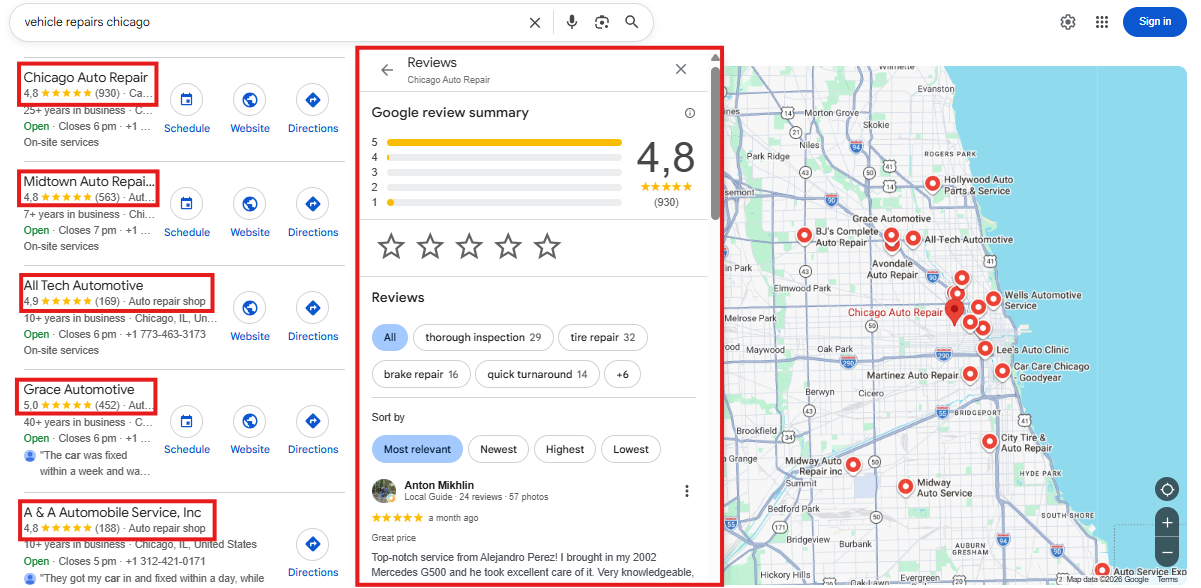
You need a consistent process to generate reviews at scale. Start by asking satisfied customers for feedback at the right moment.
When requesting reviews:
You can guide customers to mention:
For example, a review that mentions “emergency plumbing in Oceanside” provides stronger relevance signals than a generic comment.
This improves your visibility for long-tail and location-based searches.
Responding to reviews strengthens both ranking signals and customer trust.
When responding to Google reviews:
Keep responses natural, do not force keywords, and maintain a consistent tone across responses.
Consistently responding to your reviews signals that your profile is active and proactively managed, shows customer engagement and signals that your business is operational and legitimate.
Google Posts allow you to publish updates directly on your profile. These appear in your business listing and influence user engagement.
Active profiles perform better in local search. Regular updates signal that your business is engaged and operational.
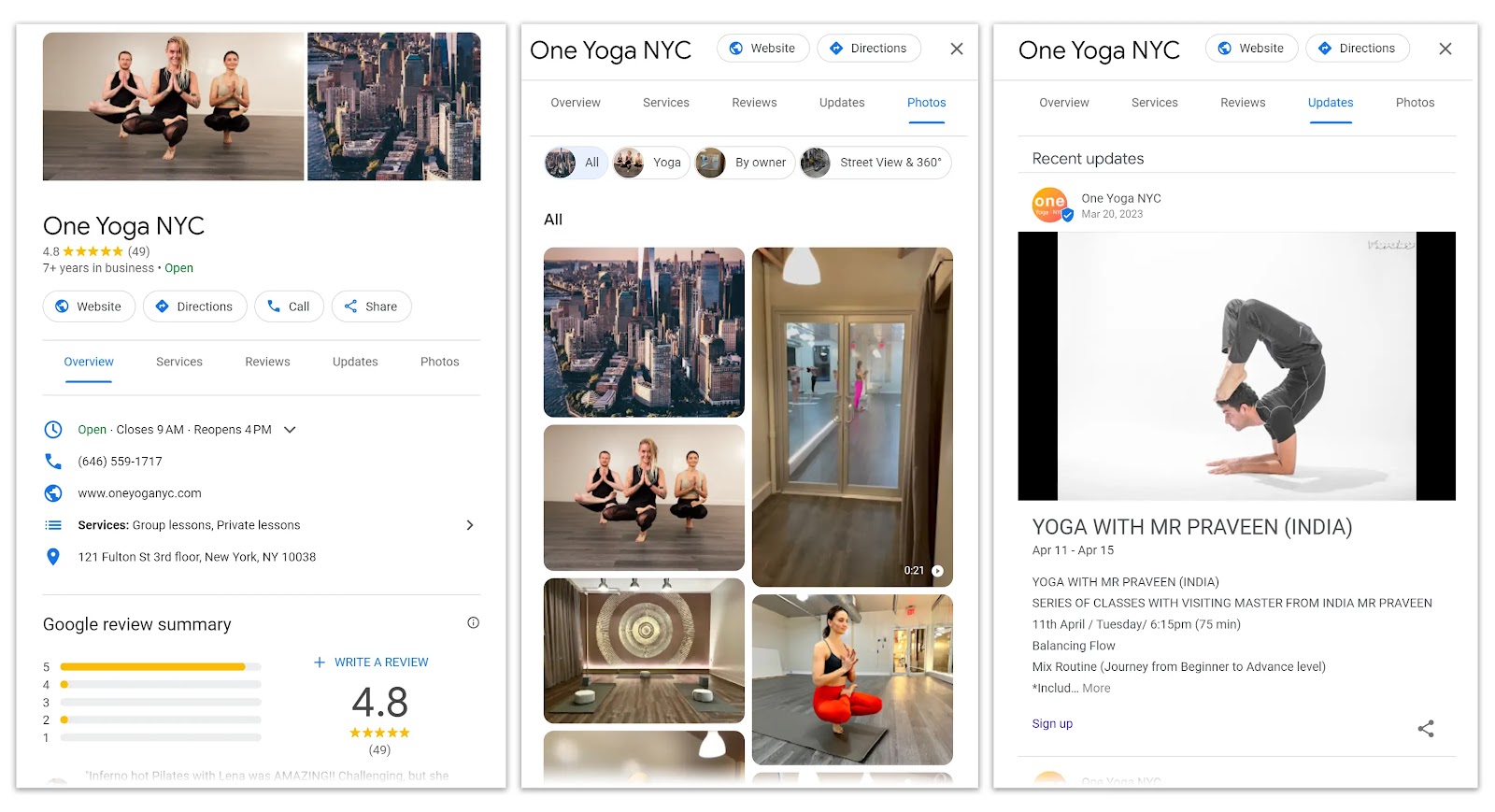
Post consistently, aim for at least one update per week, and use a mix of content types, including:
Keep posts short and action-oriented. Include clear calls to action.
Posts do not directly impact rankings. However, they improve:
Active posting also reinforces profile freshness.
Visual content plays a critical role in user decision-making. It also signals profile quality to Google.
Upload a variety of images:
Add videos where relevant. Short clips can showcase services or customer experience.
Maintain consistency:
Fresh visuals signal that your business is active and trustworthy.
The Q&A section allows users to ask questions about your business. These responses appear publicly on your profile.
Seed common questions yourself, focusing on:
Provide clear, concise answers.
Monitor this section regularly, as anyone can submit answers, including incorrect information.
To maintain accuracy:
Well-managed Q&A content improves relevance and reduces friction for potential customers.
Consistent activity across posts, media, and Q&A strengthens both engagement and conversion outcomes.
Check out this video by GMB Gorilla for more on setting up the Q&A section of your Google Business profile:
Your Google Business Profile is not just a visibility tool. It is a conversion channel. Users often take action without visiting your website first.
Optimizing for conversions increases the value of your local traffic.
Google allows you to add direct actions to your profile. These reduce the steps between discovery and conversion.
You can configure:
Choose the most relevant action for your business model. For example:
Ensure all links are functional and mobile-friendly.
Most GBP interactions fall into three categories:
Your goal is to reduce friction in each path!
To improve performance:
Clear, complete information increases user confidence and action rates.
Small errors can break the conversion journey. For example, incorrect hours often lead to lost leads and negative reviews.
Your GBP should connect users to the most relevant page on your website.
Avoid sending all traffic to your homepage. Instead:
For example, if your business offers a variety of services, link your plumbing profile to a plumbing services landing page rather than a generic homepage.
This alignment improves:
Ensure consistency between your profile and landing page:
A tightly aligned journey shows users that you offer exactly what they need and increases the likelihood that they will take the next step.
Google Business Profile is not a “set and forget” asset. You need to monitor how users interact with your profile and adjust based on real behavior.
Performance improves through continuous measurement and iteration.
Google Business Profile Insights shows how users find and interact with your listing.
Focus on core engagement metrics:
Track trends over time, not just isolated data points. Short-term spikes can be misleading.
Look for patterns such as:
These signals help you diagnose performance gaps and identify what you’re doing well already.
Use performance data to refine your profile strategy.
Start with keyword visibility patterns:
Then review engagement trends to see which:
This helps you understand what resonates with users.
Compare your performance against competitors in the Map Pack. Differences often highlight missing content or weaker signals.
GBP optimization is continuous. Regular updates keep your profile competitive and relevant.
Update key elements frequently:
This aligns with Google’s emphasis on accuracy and freshness. Profiles that stay active consistently outperform static listings.
You should also adapt to changes in search behavior:
Ongoing optimization ensures your visibility and conversions improve over time rather than plateau.
Once your Google Business Profile is fully optimized, the next advantage comes from being proactive and avoiding the common mistakes that lead to ranking losses.
Here are the things to look out for, and how to avoid them:
Keyword stuffing in your business name, description, or posts can harm performance.
Google explicitly prohibits misleading business names and content.
Avoid:
Instead, use natural language. Focus on clarity and relevance. Google understands context without repetition.
Spam tactics may produce short-term visibility but often lead to ranking suppression.
Google suspensions typically result from policy violations or inconsistent data.
Common triggers include:
To reduce risk:
Suspended profiles lose visibility immediately, so prevention is critical.
Competitor analysis helps you identify gaps and opportunities in your own listing.
Review top-ranking businesses in your category and location:
This reveals what Google is rewarding in your market.
Do not copy competitors directly. Instead, identify patterns and improve on them.
Consistency across the web strengthens your local authority.
Your business details should match across:
Even small inconsistencies can weaken trust signals.
Focus on:
Strong consistency improves both ranking stability and user trust.
A disciplined approach to these advanced areas protects your visibility and reinforces long-term performance.
Pro Tip: Many great local SEO tools offer features to help you optimize your GBP, along with the rest of your local SEO. Check out our detailed review and comparison of the best local SEO tools on the market to find a great solution for your business!
Once you have optimized your Google Business Profile for SEO, ongoing maintenance is essential for maintaining visibility in local search.
Many businesses treat their profile as a static listing, but Google rewards active, regularly updated profiles. Inactive listings gradually lose relevance and ranking strength.
Ongoing optimization, through updates, fresh content, review management, and service refinement, signals continued activity.
Small, consistent improvements outperform occasional large changes and help sustain Map Pack visibility, increase engagement, and drive more conversions over time.
A Google Business Profile is a free listing that helps your business appear in Google Search and Maps. It showcases key details like services, location, and reviews. Read the full guide to learn how to optimize it for maximum visibility.
You verify your profile through methods like postcard, phone, email, or video. Verification confirms you own the business and unlocks editing features. Read the full guide to learn how to complete verification.
Your primary category is one of the strongest ranking signals. It tells Google what your business does and which searches you should appear for. Read the full guide to learn how to choose the best categories.
You should update your profile regularly with posts, photos, and business changes. Consistent activity signals relevance and improves performance. Read the full guide to learn what to update and how often.
Yes. Review volume, recency, and rating all influence your visibility and conversion rates. Strong review profiles improve trust and rankings. Read the full guide to learn how to generate and manage reviews effectively.
No. Rankings are heavily influenced by proximity. To rank in multiple areas, you need separate listings for legitimate locations. Read the full guide to learn how to expand your local visibility correctly.
Common causes include inaccurate information, fake locations, keyword stuffing, or guideline violations. Suspensions remove your visibility immediately. Read the full guide to learn how to stay compliant and avoid risks.
Ahrefs: Local SEO: The Complete Guide
Google: Google Business Profile Setup
Wildfire SEO: Why Businesses Need an Optimized Google Business Profile
Right now, someone near your business is searching for exactly what you offer. Nearly half of all Go...
YouTube is the world's second-largest search engine, with over 800 million videos competing for atte...
Google Local Services Ads (LSAs) are one of the most effective ways for local, service-based busines...

Enroll in our free 5-lesson email course today!
Free for limited time only.